
When a customer in Scotland searches for a local tradesperson, shop or service, Google often answers with a map and a short list of businesses. That map, and the list beside it, can decide whether your phone rings. Google Maps SEO is the process of making sure your business is the one they see.
For Scottish businesses, local visibility is a practical advantage. A well-optimised Google Business Profile improves search rankings and credibility, and it helps potential customers understand where you are and what you offer. In 2026, ranking higher on Google Maps is about more than just a listing. It is about reviews, accurate information, local content and even how AI platforms describe your business.
Local search is a large part of how people find businesses. Research cited by SEO specialists in Scotland notes that 46% of searches are local, and Google processes billions of local searches every day. When someone searches for a service near them, Google Maps is often the first thing they see. If your business does not appear, those searches go to a competitor.
For Scottish businesses, the benefits go beyond visibility. A well-optimised presence on Google Maps can increase the likelihood of attracting new clients. By optimising your online presence for local searches and Google Maps, you improve visibility and make it easier for nearby customers to choose you over alternatives. That matters whether you run a construction supply company in Greenock, a roofing firm in Glasgow or a professional service in Edinburgh.
Google Maps also builds trust. A profile with accurate details, clear location information and genuine customer reviews looks credible. Customers are more likely to call a business they can find easily and verify quickly.
Google Maps SEO is the practice of improving how your business appears in local search results on Google Maps and in the local map pack. It combines your Google Business Profile, your website, your reviews and the consistency of your business information across the web.
The central tool is Google Business Profile. It is a free tool that lets you manage how your business appears across Google Search and Maps. It helps to increase the visibility of your business online and lets potential customers know the physical location of your business. When customers search for your business on Google, information shows in a box in the search results, known as a Knowledge Panel. It includes your business name, location, business hours and customer reviews.
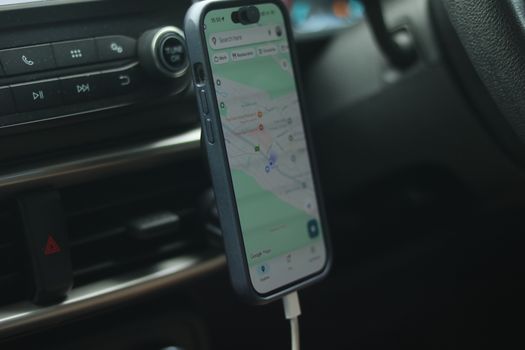
For Scottish businesses, this means the information a customer sees on a phone screen during a local search is largely within your control. The question is whether you are using that control effectively.
Because Google Business Profile is free, there is no reason to leave your listing incomplete. The first step in any Google Maps SEO strategy in Scotland is to claim your profile and check that the basics are correct.
Your business name should match how you trade, and your location should be accurate and consistent with your website. Business hours need to be current, especially if you serve customers in person. The Knowledge Panel draws on this information, so mistakes can confuse customers and weaken your local relevance.
Completeness also extends to the categories you choose. The more clearly Google understands what your business does and where you operate, the easier it is to match your profile with relevant local searches. A profile that is fully filled out, with services, photos and accurate contact details, gives Google more signals to work with.
Customer reviews are a visible part of your Knowledge Panel and a key element of local search. Reviews help nearby customers find and choose you, which is why review generation and management appear in the local search services offered by Scottish agencies.
Encouraging satisfied customers to leave a review after a job or sale is one of the most effective things a Scottish business can do. Responding to reviews, including critical ones, shows that you pay attention. A steady flow of recent reviews gives both Google and potential customers the impression that your business is active and reliable.
It is worth remembering that reviews do more than influence rankings. They are part of your credibility. A customer comparing two similar businesses on Google Maps will often choose the one with more recent, detailed reviews.

Your Google Business Profile does not work alone. Google also looks at your website and local content to understand where you operate and what you offer. Local SEO services in Scotland aim to optimise Google Business Profiles, reviews and local content so that nearby customers can find and choose your business.
This means your website should mention the areas you serve, the services you provide and the problems you solve. A roofing company in Renfrewshire, for example, should make it clear that it serves Renfrewshire and the surrounding areas, with service pages that reflect real customer needs.
Google Maps SEO is not a set-and-forget task. Agencies that deliver local SEO results continually monitor performance, track keyword rankings, analyse traffic and adapt their strategy based on search trends and what competitors are doing. If your competitor gains ground on a valuable local keyword, you need to know and respond.
Customers no longer find businesses only through Google search. More people now check Google Maps and ask AI platforms such as ChatGPT and Perplexity for recommendations. In 2026, Scottish businesses need visibility in both places.
AI answer engines rely on structured, consistent information. If your business data is clear and your website is well structured, AI platforms can cite you directly as a recommendation. This is often described as AI answer engine optimisation, and Scottish SEO specialists now work to secure top local rankings and direct citations on platforms such as ChatGPT, Perplexity and Claude.
The practical takeaway is simple. The same foundations that help you rank on Google Maps, accurate details, strong reviews and clear local content, also make it easier for AI platforms to reference your business. One well-maintained profile supports visibility across Google and the growing range of AI search tools.

Yes, the basics are accessible. Google Business Profile is a free tool, so any Scottish business can claim its listing, update its details and start collecting reviews. For a small local business with time to spare, that may be enough to appear in local searches.
However, ranking consistently against established competitors takes more work. SEO companies across Scotland, from Glasgow and Lanarkshire to the rest of the UK, offer professional SEO services for small and medium-sized businesses. Their work includes ongoing optimisation, monitoring, competitor analysis and adaptation to search trends.
For businesses with limited time or valuable local keywords to defend, professional support can be a sensible investment. A local SEO provider that understands the Scottish market can help you turn search visibility into calls, bookings and enquiries.
Regular SEO focuses on how your website ranks for relevant searches. Google Maps SEO focuses on how your business appears in local map results. The two overlap because your website content supports your Google Business Profile, but Maps SEO places extra weight on location, business categories, reviews and consistent contact details across the web.
Yes. Google Business Profile is a free tool, so you can claim your listing, correct your business name, location and hours, and respond to customer reviews without paid help. The day-to-day maintenance is manageable. What can be harder is the ongoing monitoring of keyword rankings, search trends and competitor activity that keeps a profile competitive over time.
AI platforms do not directly change how Google Maps ranks businesses, but they change how customers find you. Many people now ask ChatGPT, Perplexity or Claude for local recommendations instead of typing a search. If your business information is structured clearly and your profile is well maintained, AI platforms are more likely to cite you as a recommended local option.
Local search is a major source of customers, with a large share of searches having local intent. Google Maps is often the first place customers look, and AI platforms are becoming an alternative route to recommendations. A business that appears in both places gives itself a clear advantage over competitors that rely on search alone.